Build a dated timeline
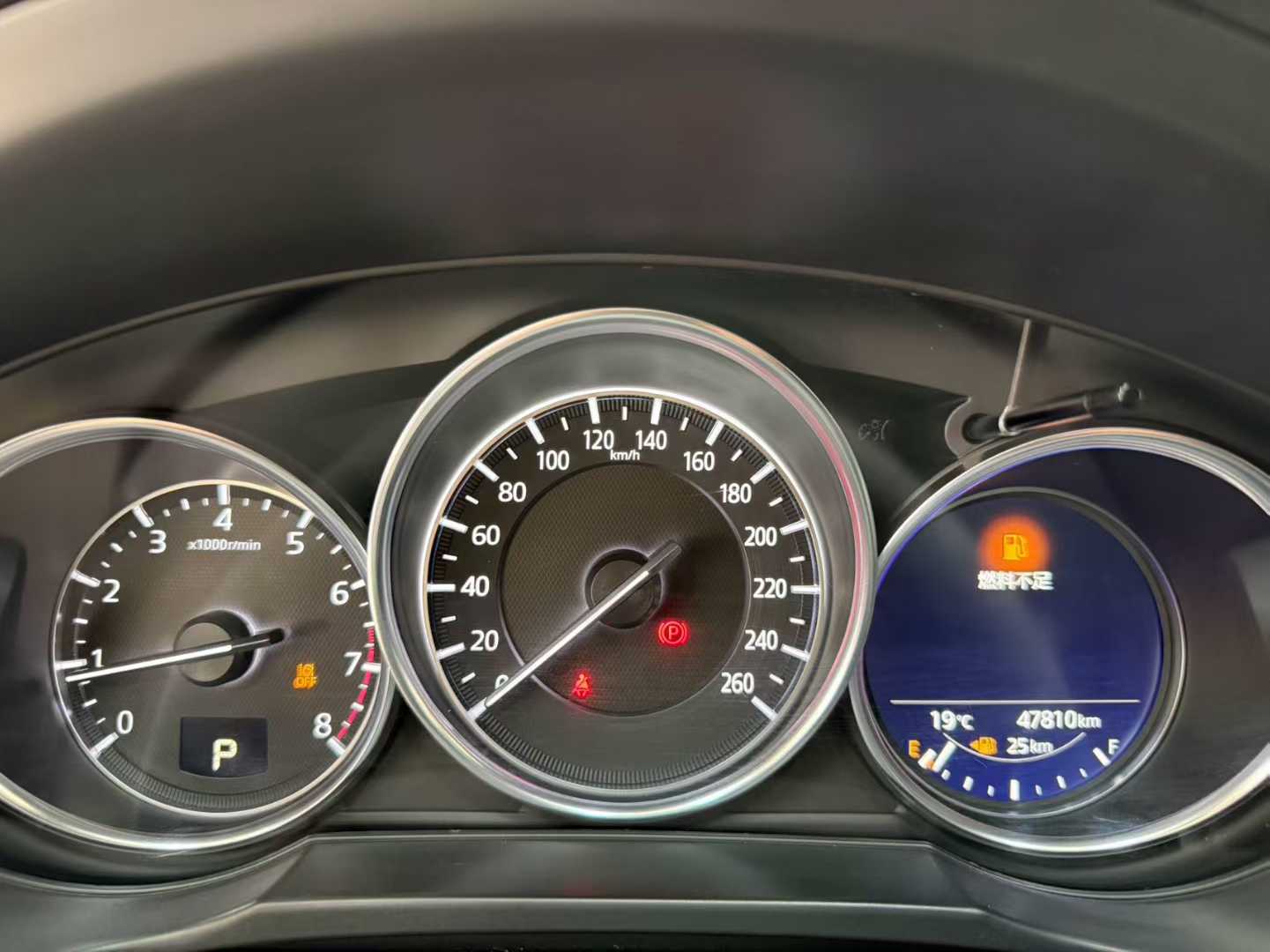
Record production, registration, inspection, service and listing dates with the odometer shown at each event. Original invoices and workshop records carry more weight than an undated service-book stamp or a translated summary.
Cross-check physical evidence
Compare steering wheel, pedals, seat bolsters, switches, door hardware, tyres and brake wear with the claimed use. Wear cannot prove one exact distance, but unexplained inconsistency should stop automatic acceptance of the displayed mileage.
Price the evidence gap
When history is incomplete, use a conservative baseline service and stronger mechanical inspection rather than inventing a record. The CX-5 service-planning guide helps turn overdue work into a visible purchase-budget line. Long inactive periods should trigger the 12V battery, storage and i-stop checks. Check recall completion and destination warranty support separately: service invoices do not establish that an outstanding campaign is closed or that coverage transfers abroad.
Quick answer
Accept a CX-5 mileage claim only after reconciling dated documents, service records, inspection entries, electronic evidence and physical wear. An incomplete history is not proof of fraud, but it increases uncertainty and should change inspection depth, baseline service and price.
Turn scattered records into one history
Make a timeline with production date, first registration, each service or inspection date, recorded mileage and evidence source. A consistent sequence supports the claim; gaps remain gaps. The CX-5 buying process should preserve this timeline with the VIN-specific file.
Physical wear is a cross-check, not an odometer calculator. Seat bolsters, pedals, steering controls, door hardware, tyres, brakes and underbody use can expose inconsistency, but care, replacement and route can change their appearance. Report the conflict and investigate it rather than assigning a invented distance.
Service quality matters alongside frequency. Confirm the correct engine and schedule, oil specification and applicable drivetrain work. When evidence is weak, add baseline work and a contingency to the landed-cost comparison instead of presenting an unsupported full history.
Score evidence by strength
Original dated invoices tied to the VIN or registration and supported by workshop or electronic records are stronger than isolated stamps, seller summaries or screenshots. Preserve originals where possible and note translations separately so altered wording does not replace the source.
Use the history gap to set inspection depth. Missing oil evidence increases engine scrutiny; missing brake or tyre records increases measurement; unclear AWD maintenance adds driveline checks. The response is targeted evidence, not a blanket claim that the car is bad.
Decision table
What to verify before choosing
- 01Build one chronological table containing every dated odometer reading and record source; flag reversals and unexplained long gaps.
- 02Match VIN, owner or registration information and workshop identity on service evidence where privacy and local rules permit.
- 03Compare physical wear and diagnostic clues with the stated use without pretending wear can calculate an exact odometer.
- 04Use the correct Mazda schedule to identify time- and distance-based work that is due, overdue or unsupported by evidence.
A practical action plan
Timeline
Build one chronological table containing every dated odometer reading and record source; flag reversals and unexplained long gaps.
Record quality
Match VIN, owner or registration information and workshop identity on service evidence where privacy and local rules permit.
Wear check
Compare physical wear and diagnostic clues with the stated use without pretending wear can calculate an exact odometer.
Budget response
Use the correct Mazda schedule to identify time- and distance-based work that is due, overdue or unsupported by evidence.
Which buyer profile fits?
Scenario 1
A higher-mileage motorway vehicle with continuous maintenance can outrank a low-mileage car with gaps and severe short-trip wear.
Scenario 2
A low-use older car still needs tyre-age, battery, fluid, seal and storage-condition checks.
Scenario 3
A dealer comparing several cars should apply the same evidence hierarchy and history-gap allowance to every VIN.
How to compare shortlisted vehicles
| Decision area | Target | Weight |
|---|---|---|
| Timeline | Production, registration, inspection and service dates with readings | Mandatory match |
| Record quality | Original invoice or system entry before stamp, summary or seller statement | High priority |
| Wear check | Cabin controls, seat, pedals, tyres, brakes and chassis | Cost and risk |
| Budget response | Baseline service plus unresolved-history contingency | Final confirmation |
Mistakes that create avoidable cost
- Treating a service-book stamp as conclusive without dates, readings or workshop traceability.
- Rejecting every incomplete history as tampering without further evidence.
- Using clean upholstery as proof of low mileage.
- Ignoring time-based maintenance because the odometer is low.
Frequently asked questions
What proves a CX-5 mileage?
No single clue is perfect; the strongest conclusion comes from consistent dated records, electronic evidence and physical condition.
Is higher mileage always worse?
No. Route, maintenance, repair history and present condition can matter more than the displayed number alone.
What if service history is missing?
Increase inspection depth, budget a correct baseline service and value the vehicle with the uncertainty visible.
Should service intervals be copied from another country?
No. Use the schedule matching the engine, market and operating conditions.
Reference sources
Official information is used to understand the model family. The individual VIN, documents and inspection remain authoritative for a vehicle offered for sale.
Verify the exact vehicle
Specifications vary by year and market. Match the VIN, vehicle documents, inspection findings and manufacturer service information before purchase.