
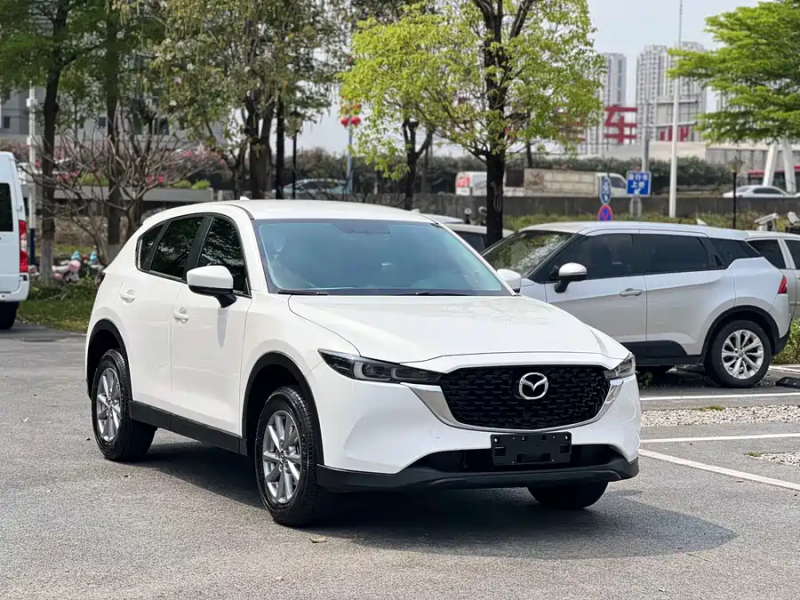
Reconstruct storage and battery identity
Record production, registration, movement, charging and inactive periods plus jump starts. Photograph battery technology, rating, date, terminals, hold-down and replacement marks and match them to the exact vehicle.
Test without hidden external support
State rest time, temperature and method, then observe unlock, cranking, charging support, repeated restart and i-stop readiness. A charger-connected showroom demonstration does not represent loading or arrival reserve.
Control accessory loads and handover
Identify cameras, trackers and aftermarket wiring, preserve low-voltage faults before reset and measure suspected draw. Add replacement and storage evidence to the CX-5 service-history timeline and define the receiver wake-up check.
Define storage and arrival recovery
Agree who will check voltage during yard storage and what charger procedure is suitable for the fitted battery. Confirm carrier rules before disconnecting it, because locks, alarm and learned functions may be affected. Photograph warnings, odometer and operating state at loading. At destination, measure before repeated start attempts, recharge correctly, rescan after stable voltage and verify i-stop prerequisites. Budget replacement from measured health and elapsed storage rather than treating a recent jump start as a lasting correction.
Measure settled draw when symptoms justify it
Allow the vehicle to complete its normal shutdown sequence before measuring parasitic current with suitable equipment. Keep keys and paired devices from waking modules, then isolate aftermarket cameras, trackers or chargers methodically. One early reading during module activity is not a sleep-current result. Save the original diagnostic state and retest after the suspected circuit is corrected. This separates an aged battery from a vehicle that will repeatedly discharge a replacement during yard storage.
Approve the complete low-voltage system
Combine battery identity, rested health, cranking behaviour, charging support, sleep current and repeated i-stop readiness in one candidate record. Note ambient conditions and any test that could not be completed. Confirm the replacement specification and whether programming or relearning is required. If the car needs repeated external support, carries unexplained accessory wiring or develops new undervoltage faults after a normal rest, resolve the cause before loading or choose another vehicle with a more stable handover record.
Quick answer
Approve low-voltage condition only after a normal-rest test, correct battery identification, preserved fault history and stable repeated operation without hidden charger support.
Decision table
What to verify before choosing
- 01Build the inactivity timeline and record every external-support event.
- 02Identify battery technology and rating for the exact vehicle.
- 03Scan before clearing and repeat wake and start after normal rest.
- 04Measure suspected accessory draw and define arrival recommissioning.
A practical action plan
Timeline
Build the inactivity timeline and record every external-support event.
Battery
Identify battery technology and rating for the exact vehicle.
Operation
Scan before clearing and repeat wake and start after normal rest.
Handover
Measure suspected accessory draw and define arrival recommissioning.
Which buyer profile fits?
Scenario 1
A low-mileage stored car can need more battery scrutiny than a regularly used one.
Scenario 2
i-stop inactivity can reflect operating conditions as well as battery state.
Scenario 3
A port jump start should reopen the condition decision.
How to compare shortlisted vehicles
| Decision area | Target | Weight |
|---|---|---|
| Timeline | Storage, movement, charging and jump starts | Mandatory match |
| Battery | Type, rating, date and installation | High priority |
| Operation | Wake, crank, charging support and i-stop | Cost and risk |
| Handover | Accessory load and arrival procedure | Final confirmation |
Mistakes that create avoidable cost
- Using jump-start success as a health test.
- Testing while a charger remains connected.
- Replacing the battery without checking accessory draw.
- Clearing undervoltage faults before preserving them.
Frequently asked questions
Can a jump start prove battery health?
No. It shows only that external power restored operation.
Does inactive i-stop prove a failed battery?
No. Verify vehicle conditions, faults and battery reserve.
Does low mileage remove storage ageing?
No. Time and inactivity still affect batteries, tyres and brakes.
Reference sources
Official information is used to understand the model family. The individual VIN, documents and inspection remain authoritative for a vehicle offered for sale.
Verify the exact vehicle
Specifications vary by year and market. Match the VIN, vehicle documents, inspection findings and manufacturer service information before purchase.