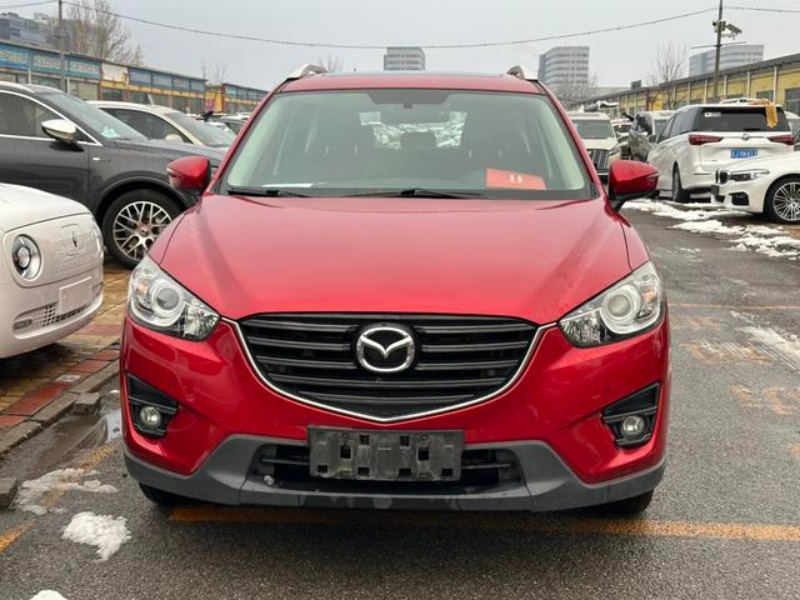
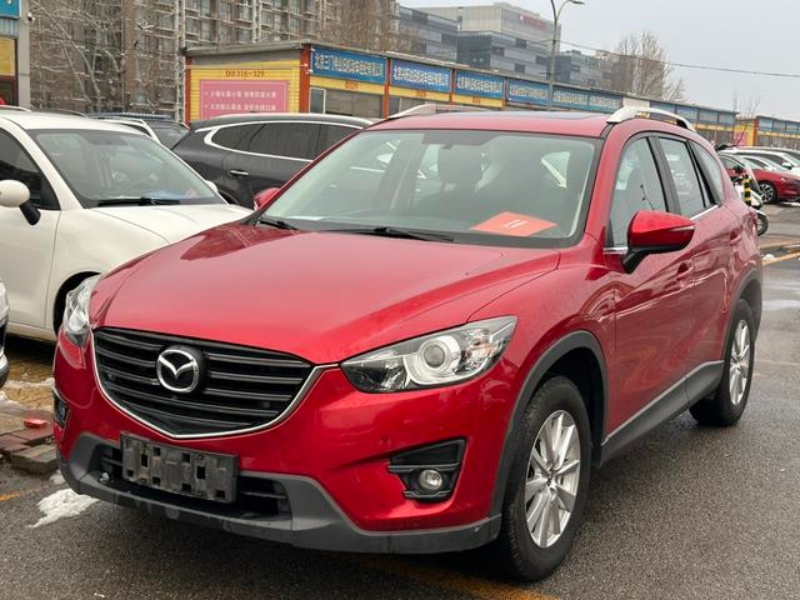
FWD advantages
Front-wheel drive can be a rational choice for mild climates and paved-road use, with fewer driveline components to inspect. Local availability may also be broader or cheaper. For a snowy destination, assess winter tyres, cold-weather function and salt corrosion alongside the drivetrain choice.
AWD advantages
AWD can improve traction management on wet, loose or wintry surfaces. It is most useful when paired with correct tyres and when the extra complexity has been properly maintained.
AWD inspection points
Confirm the vehicle is genuinely AWD from documentation and hardware. Check matching tyre sizes and similar wear, scan for related faults and listen for transfer or rear driveline noise during the road test. Confirm any shift or engagement concern through the CX-5 automatic-transmission road test.
Quick answer
FWD is the simpler choice for paved roads and mild climates; i-ACTIV AWD can improve traction management where rain, snow, loose surfaces or gradients justify it. AWD does not replace suitable tyres and adds inspection points.
Choose AWD for a defined use case
FWD is often rational for paved roads and mild climates, with fewer driveline components to inspect. Correct tyres, suspension and alignment remain essential.
i-ACTIV AWD can improve traction management on wet, snowy, loose or steep roads, but it does not improve braking by itself. Budget for four compatible tyres and verify their size, age and wear.
Confirm AWD physically and in documents, scan the related systems and inspect transfer and rear-drive components. Pay the premium only where the destination and actual use benefit.
Inspect the complete traction system
For AWD, record all four tyre sizes, brands, model lines, dates, tread depths and visible damage. Material circumference differences can burden the system. Inspect transfer and rear-drive areas for leakage or impact and road-test at low and cruising speeds for vibration, binding or warning messages.
For FWD, do not treat simplicity as proof of condition. Check front tyres, joints, bearings, alignment and torque steer symptoms. Choose either layout after considering the roads actually used, tyre availability and the cost of maintaining the complete system correctly.
Traction layout should also be included in the resale study. An AWD premium can be recoverable in snowy markets but unnecessary in warm cities; local demand is more useful than a universal recommendation.
Decision table
What to verify before choosing
- 01Verify drivetrain in documents and underneath the car.
- 02Check all four tyre sizes, brands, age and circumference compatibility on AWD.
- 03Scan AWD-related modules and road-test for warning lights, vibration or driveline noise.
- 04Compare the full landed and ownership cost, not just the seller premium.
A practical action plan
FWD strengths
Verify drivetrain in documents and underneath the car.
AWD strengths
Check all four tyre sizes, brands, age and circumference compatibility on AWD.
AWD obligations
Scan AWD-related modules and road-test for warning lights, vibration or driveline noise.
Universal need
Compare the full landed and ownership cost, not just the seller premium.
Which buyer profile fits?
Scenario 1
FWD suits warm urban destinations with good paved roads.
Scenario 2
AWD suits buyers regularly facing snow, steep gradients or loose access roads.
Scenario 3
Where tyre supply is poor, maintaining an AWD set can be a meaningful constraint.
How to compare shortlisted vehicles
| Decision area | Target | Weight |
|---|---|---|
| FWD strengths | Simplicity, potentially lower price and fewer driveline components | Mandatory match |
| AWD strengths | Traction management for demanding surfaces and climates | High priority |
| AWD obligations | Compatible tyres and extra transfer/rear drive checks | Cost and risk |
| Universal need | Correct tyres, brakes, alignment and driver judgment | Final confirmation |
Mistakes that create avoidable cost
- Buying AWD for a badge rather than a use case.
- Running mismatched tyres.
- Assuming AWD improves braking distance.
- Failing to inspect transfer and rear driveline components.
Frequently asked questions
Can photos prove AWD?
No. Verify documents and physical drivetrain hardware.
Does AWD use more fuel?
It can add weight and mechanical load, but exact consumption depends on year, engine and use.
Does AWD make winter tyres unnecessary?
No. Tyres provide the contact with the road for acceleration, cornering and braking.
Is FWD unsuitable for export?
No. It is often the rational choice in mild, paved-road markets.
Reference sources
Official information is used to understand the model family. The individual VIN, documents and inspection remain authoritative for a vehicle offered for sale.
Verify the exact vehicle
Specifications vary by year and market. Match the VIN, vehicle documents, inspection findings and manufacturer service information before purchase.